
Which Umeda? Mapping the station cluster for meetings north of Osaka Station
I’m a customer-success lead from Singapore, in Osaka for four nights on my own. The work is client workshops, mostly around Grand Front Osaka, on the north side of JR Osaka Station. The first invite just said “Umeda.” I had to put the cluster in my head before I trusted any walking time.
At home I’m used to one station name pointing to one set of gates. Here, “Umeda” is a district of ticket gates, not a single door. The Osaka Loop Line does not even drop you at a station called Umeda: it arrives at JR Osaka Station (大阪駅). Around it sit Osaka Metro Umeda, Higashi-Umeda and Nishi-Umeda, Hankyu Osaka-Umeda, Hanshin Osaka-Umeda, and JR Tozai Line Kitashinchi (北新地). An email that says “Umeda” is not a pin.
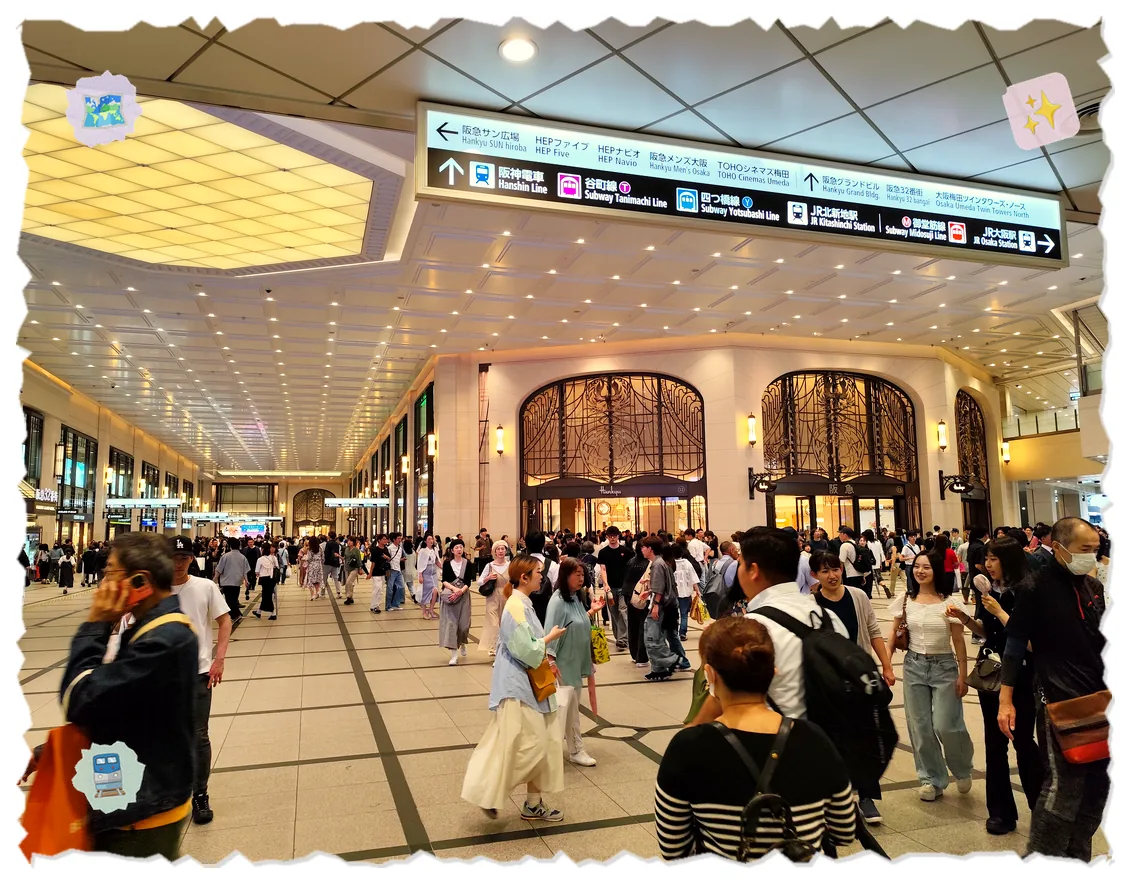
Which Umeda — and which door?
When a colleague writes only “Umeda,” I no longer treat that as a destination. I ask for, or look up, three things and drop them into a map app: the building’s full name, the floor, and a nearest station — not the word “Umeda” on its own. I don’t memorise exit numbers. Official building access pages and that day’s navigation are more reliable than a door I remember from Tuesday.
- JR Osaka Station (大阪駅) — the Loop Line stop, and the one I use from Sakuranomiya.
- Osaka Metro Umeda (梅田) on the Midosuji Line, Higashi-Umeda (東梅田) on the Tanimachi Line, and Nishi-Umeda (西梅田) on the Yotsubashi Line.
- Hankyu Osaka-Umeda (阪急大阪梅田) and Hanshin Osaka-Umeda (阪神大阪梅田).
- JR Tozai Line Kitashinchi (北新地) — in the same district, but a different line and a different gate.
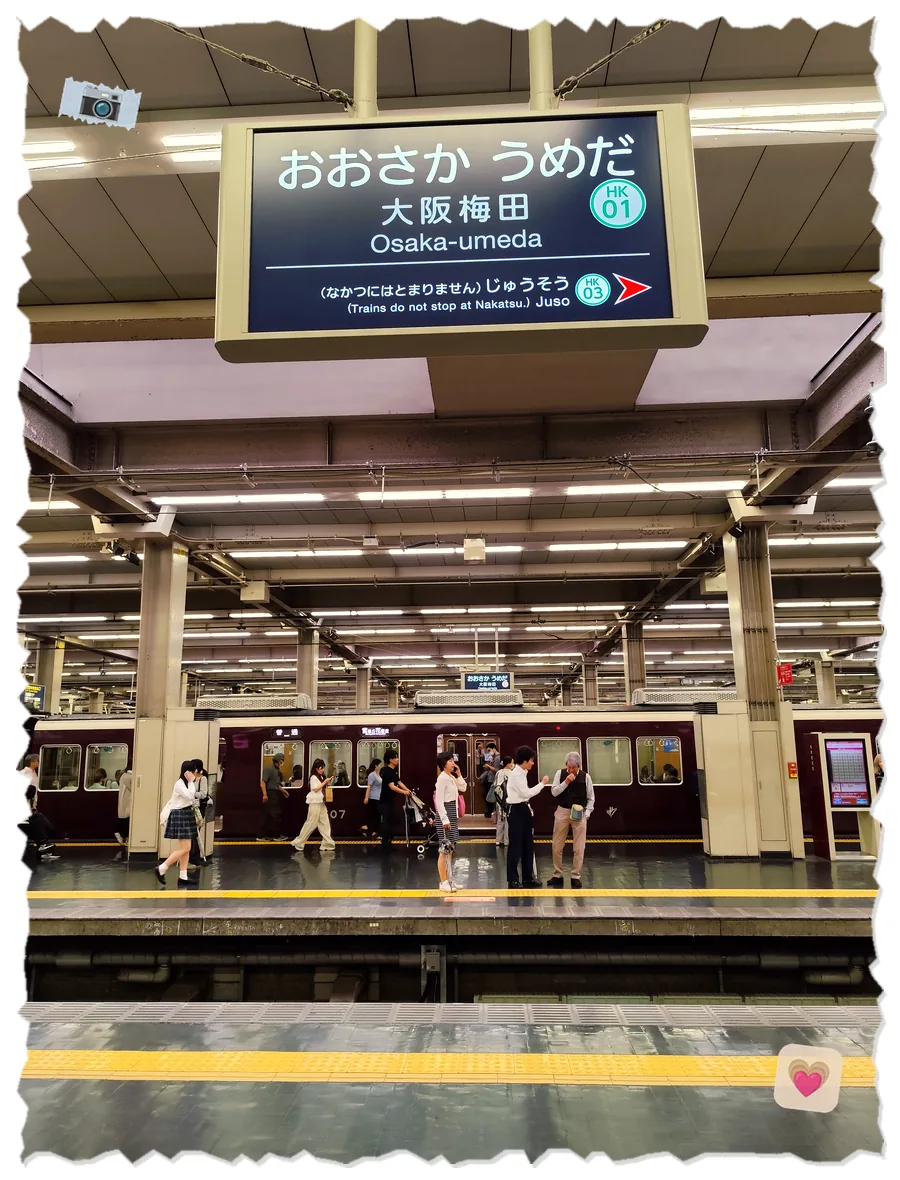
The clusters I keep in my head
I don’t try to memorise every corridor. I keep four clusters, plus the fact that some of them connect indoors.
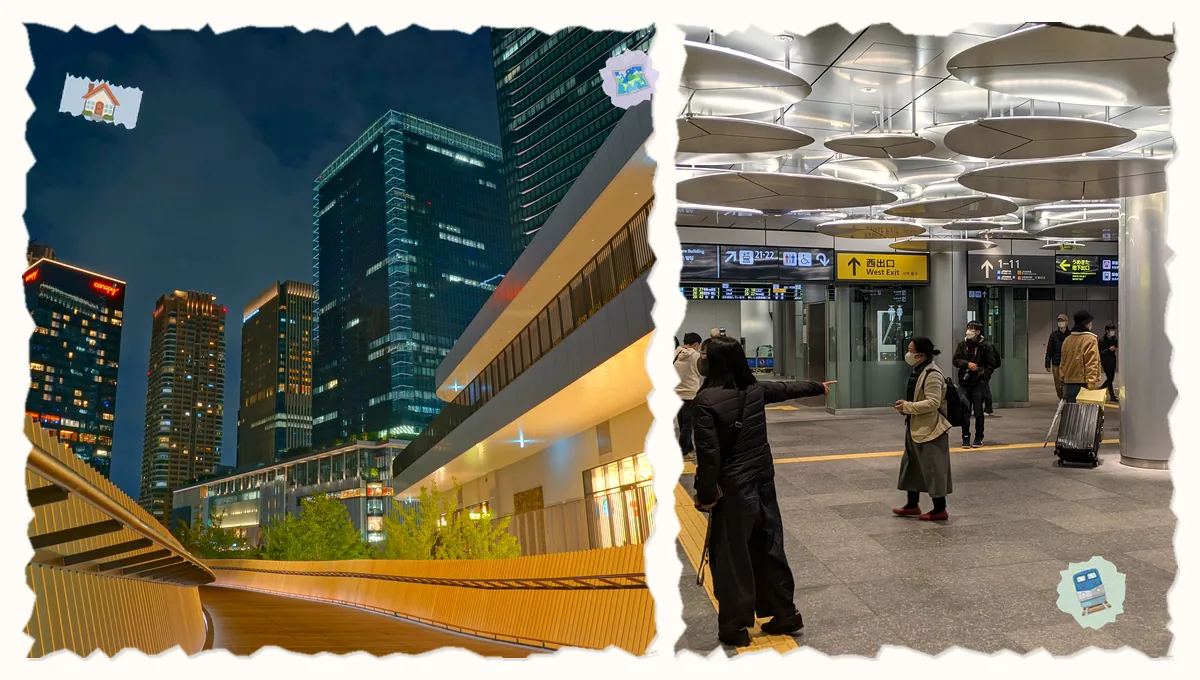
- North / Umekita. This is where Grand Front Osaka sits — the South Building (南館), the North Building (北館), and Umekita Plaza (うめきた広場). If the workshop is in Grand Front, I pin the building and floor, then follow the official access page and the map, rather than a fixed exit number.
- The station buildings. Osaka Station City and LUCUA are useful landmarks when I come off the Loop Line. I use them to orient myself, not as a shopping list.
- West. Herbis and the Nishi-Umeda side. If the invite is over here, going up through Grand Front first is usually the long way.
- The Hankyu–Hanshin side, east and slightly south of the JR building. Their station names both include “Osaka-Umeda”; they are still not the JR gates.
Under the roads, underground malls such as Whity Umeda (ホワイティうめだ) and Diamor Osaka (ディアモール大阪) link several of these stations, so you can walk between some of them without going outside. Hours are not identical, and I check them on the day rather than assuming a late-evening corridor will still be open.
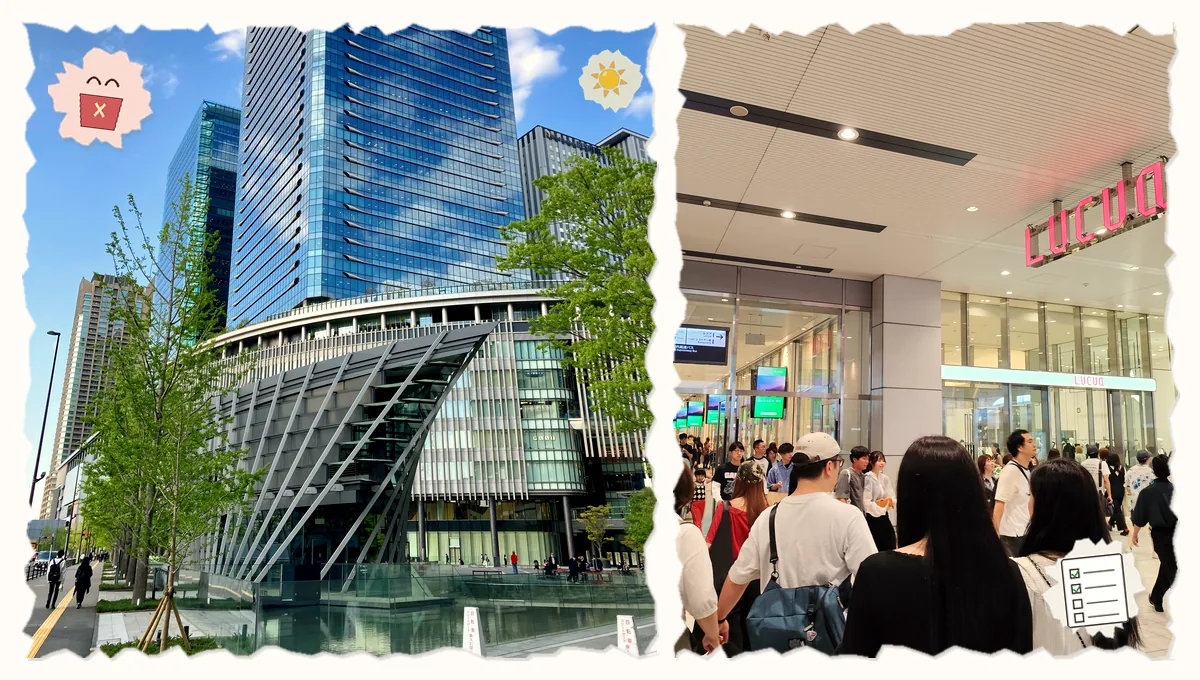
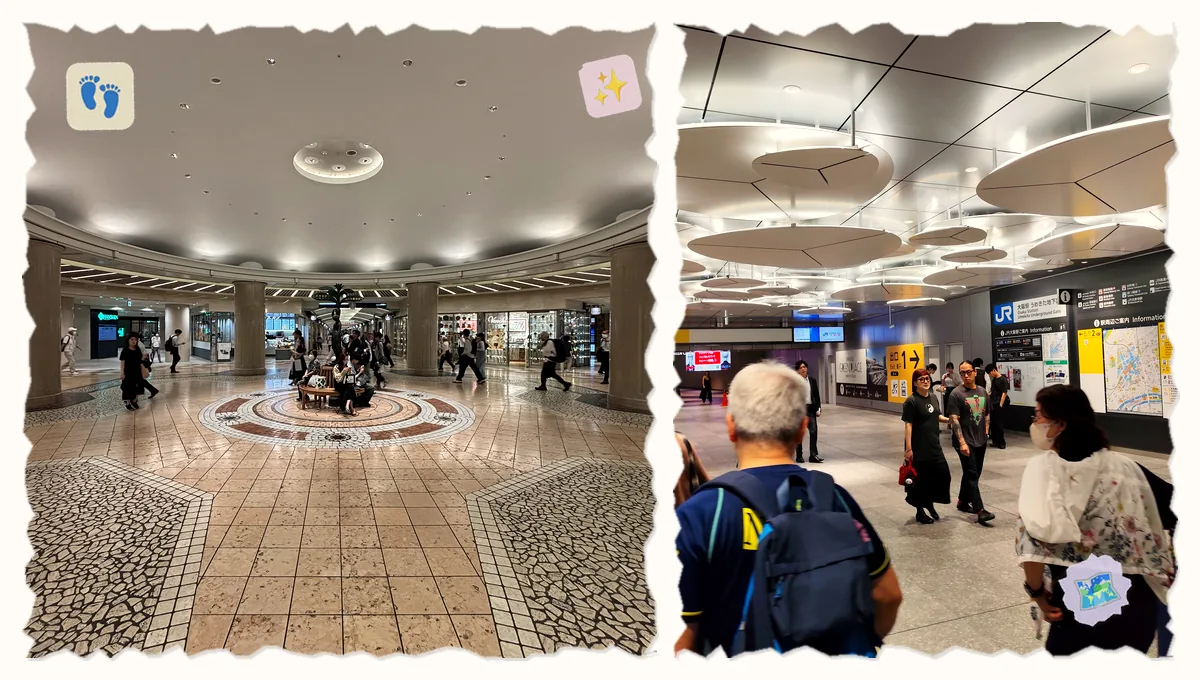
Two stops on the Loop Line is not the meeting room
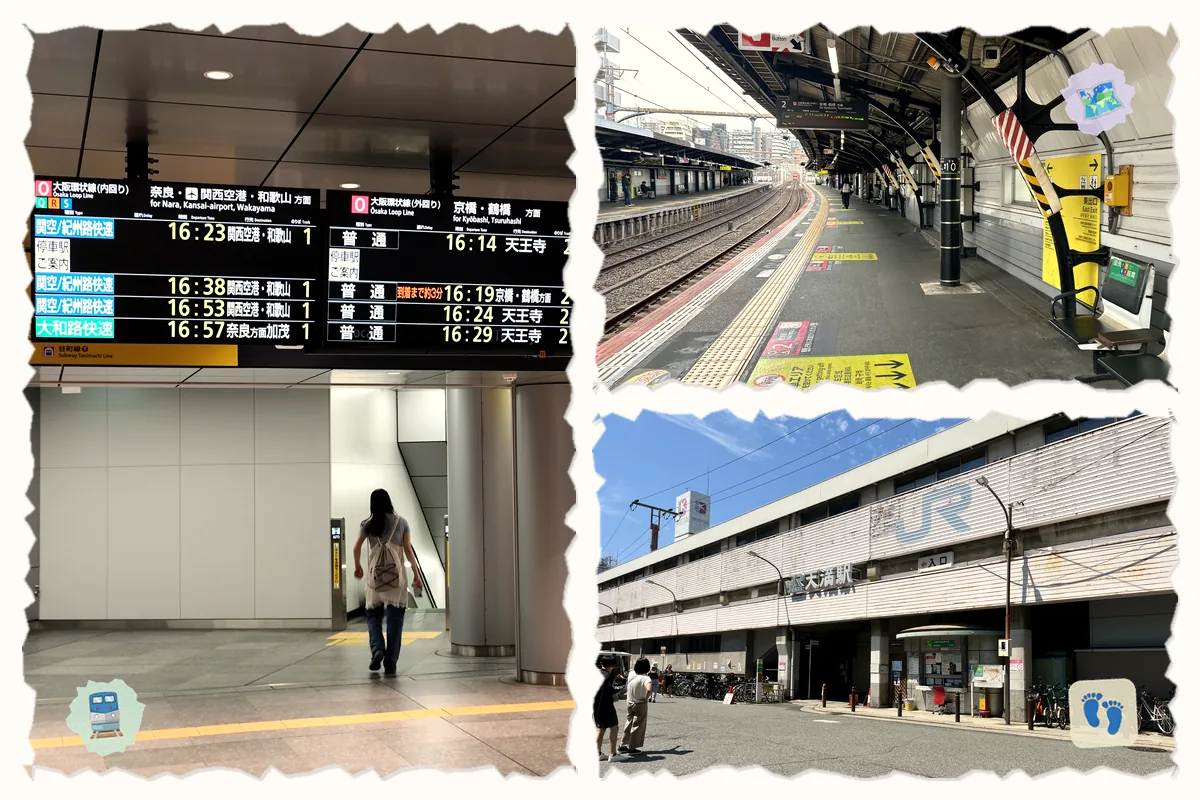
I stay near JR Sakuranomiya — 大阪宽居民宿 is about a three-minute walk from the station — and I work in the evening in a place with a kitchen and a washer. The ride itself is simple on paper. From Sakuranomiya, the Osaka Loop Line (大阪環状線) 内回り, the inner loop, runs via Temma (天満) and reaches Osaka in two stops. Coming back, I want the 外回り, the outer loop, via Temma again. Board the loop the wrong way and the train goes the long way around.
What I don’t do is translate “two stops” into “five minutes to the workshop room.” After I get off there is still the platform, a ticket gate, the station buildings, and the walk to the north side, then the right building and floor. I leave a planning buffer, and I check a live timetable or a map app that morning — not a time I memorised on the first day. An ICOCA, another compatible IC card, or a phone wallet covers the ride; I confirm the fare on the day.
One short exception: if the meeting is around Osaka Business Park, I don’t default through Umeda. From Sakuranomiya, the 外回り already runs toward Osakajokoen and Kyobashi.
Lunch without leaving the meeting day
If the gap is a real lunch, I stay in the station or office buildings — Grand Front and the station buildings both have food floors — and I still leave slack to get back through the cluster. I don’t turn that gap into a trip to Shinsaibashi or Namba. Those are a different part of the city, and a late return is harder to explain than a simple lunch.
After the last workshop
In the evening I follow the same rule I use in the morning: pin the 外回り toward Sakuranomiya, and check that day’s last trains rather than a time I copied from a post. Underground passages and some building connections do not all keep the same hours; if I am late, I confirm the route I am actually walking.
The stay itself is set up for a day out and an evening of notes: a kitchen if I don’t want another restaurant, and a washer for a four-night trip. That is enough; this is not a booking page.
Before I head out
- Pin the building’s full name, the floor, and a nearest station — not just “Umeda.”
- From Sakuranomiya to JR Osaka, confirm 内回り via Temma; coming back, 外回り via Temma. Check live.
- Leave a buffer after the two stops for gates, the station cluster, and the walk to the room.
- Use official access pages for Grand Front and the JR Osaka station map; don’t rely on memorised exit numbers.
- Keep lunch in the station or office buildings. Don’t spend the gap on a hop to Shinsaibashi or Namba.
- In the evening, check last trains and whether the underground route you planned is still the one you want.
Useful links: Grand Front Osaka access · JR Osaka Station map · Osaka Station 3D map · Osaka Metro Umeda · Loop Line train position
Make your next Osaka trip a shared stay
Enter your dates and full guest count to see live availability and the whole-house total. Check children’s details, accommodation tax, check-in times and cancellation terms before paying.
 Booking.com
 Airbnb
 Agoda
No payments are taken here. Book, pay and message the property through Booking.com or Airbnb.